On April 5th 2017, the Australian Embassy in Israel and the Oxford Digital Diplomacy Research Group co-hosted a workshop on Digital Diplomacy. The workshop, which was attended by journalists, foreign diplomats and members of the Israeli MFA (Ministry of Foreign Affairs), focused on three issues: utilizing digital tools for communicating with journalists, transitioning from digital... Continue Reading →
How Palestine Digitized It’s Public Diplomacy
NOTE: This blog post originally appeared on the USC CPD Blog and was co-written with Professor Marcus Holmes In 2011, the U.S. State Department launched Virtual Embassy Iran, a web-based platform that aimed to promote American “values and culture” to Iranians. This embassy served as an example of how diplomats can use digital technologies to... Continue Reading →
Digitizing the EU’s Public Diplomacy in Israel
Introduction The relationship between Israel and the European Union has been strained for some time. Indeed it is enough to review op-eds published in Israeli newspapers to sense the resentment Israelis hold towards Brussels. This is, in part, a result of three EU policies. The first is the EU’s ongoing critique against Israeli settlements and... Continue Reading →
On the use of videos in Digital Diplomacy
Images & Diplomacy Images have traditionally played an important role in diplomacy. For instance, paintings were often used to bare testimony to diplomatic summits and conferences. Such is the case with Gerard ter Borch’s painting of the treaty of Munster. Additionally, political cartoons were used to narrate a nation’s foreign policy, frame its adversaries, manage... Continue Reading →
How Embassies Managed the London Terror Attack
The horrid attack that shook London on Wednesday was a painful reminder that terrorism still plagues our world. Within minutes of the attack confusion and panic spread offline and online as people scrambled to make sense of the events unfolding outside Parliament. Initial reports indicated that several terrorists had attacked various targets across the city.... Continue Reading →
Is the Backstage of Diplomacy Disappearing?
20th Century Diplomacy For most of the 20th Century, diplomacy was practiced behind iron curtains. While diplomats would often pose for photo opportunities, such photographs were taken before and after their meetings. The diplomatic deliberations themselves took place within the inner sanctums of great palaces or behind the closed doors of historic halls. It was... Continue Reading →
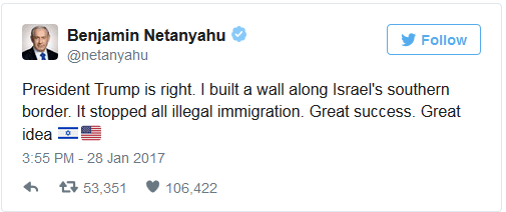
What’s in a Tweet? The Case of Benjamin Netanyahu and the Mexican Wall
Yesterday evening I was interviewed on an Israeli radio show regrading a recent tweet published by Israeli Prime Minister Benjamin Netanyahu. In this tweet the PM argued in favour of the construction of a wall between the US and Mexico. As usual, I was asked “What’s in a Tweet?”, or how much information can we... Continue Reading →
10 Tips to Increase ROI on #DigitalDiplomacy
On Friday, December 2nd, the Oxford Digital Diplomacy Research Group, and the Latvian Mission to Geneva, co-hosted a Digital Diplomacy event at the UN headquarters in Geneva. The purpose of the event was to examine whether there is a Return On Investment in digital diplomacy activities. The event demonstrated that the first stage of digital... Continue Reading →
Evaluating the Dialogic Activities of London Embassies
When one explores the digital diplomacy activities of embassies, he is often surprised by the number of social media accounts embassies now maintain. For instance, embassies in Washington DC are often active on Facebook, Twitter, YouTube and Instagram. The rationale for operating several accounts lies in the understanding that audiences use different social media platform... Continue Reading →
Evaluating Palestine’s Digital Diplomacy Strategy
Note: A version of this post originally appeared on the USC Centre on Public Diplomacy's Blog From a diplomatic perspective, Palestine represents a puzzling case study. On the one hand, Palestine has been recognized as an independent state by the UN General Assembly. On the other hand, it is not a full member state of... Continue Reading →