Over the past few weeks, several reports and publications have suggested that social media is entering a new era. The reason being that social media is increasingly becoming less social. During the early days of social media, millions of users would publish updates from their daily lives. Platforms such as Facebook, Twitter and Instagram were... Continue Reading →
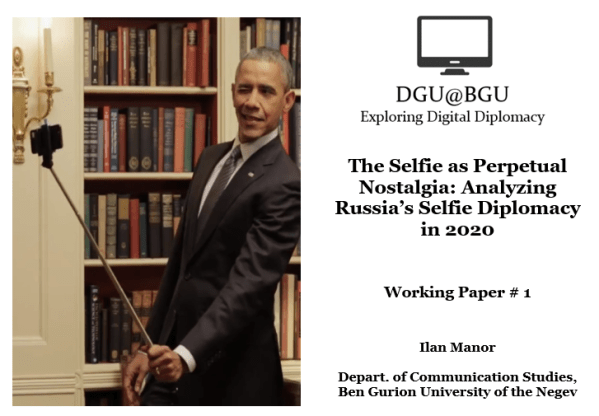
New Working Paper: Analyzing Russia’s Selfie Diplomacy
This week I have published a new working paper examining Russia's practice of 'Selfie Diplomacy' during 2020-2021. The Working paper begins by discussing why nostalgia is such a common sentiment in todays' world, arguing that nostalgia is an attempt to force logic onto an incoherent world. Next, the working paper examines the Selfie and asserts... Continue Reading →
Social Media & Life in the Risk Society
In his book ‘Risk Society’, German Sociologist Ulrich Beck proposes a theory of reflexive modernity. Unlike other sociologists, Beck is far removed from the utopian vision of modernization as the continuous progress of industry and human thought. Namely he is concerned with the role of scientific knowledge in society. In Beck’s mind, scientific and industrial... Continue Reading →
What Can Cultural Theory Tell Us About Trump’s Populist Public Diplomacy the Digital Age?
Paweł Surowiec (University of Sheffield) and Chris Miles (Bournemouth University) During the Cold War, the categorisation between ‘high’ and ‘low’ politics, mirrored by 'high' and 'low' cultures, was distinguishable as a trend in public diplomacy. These distinctions became blurred and, in the early 2000s, a new trend emerged whereby ‘high’ politics began borrowing from 'low'... Continue Reading →
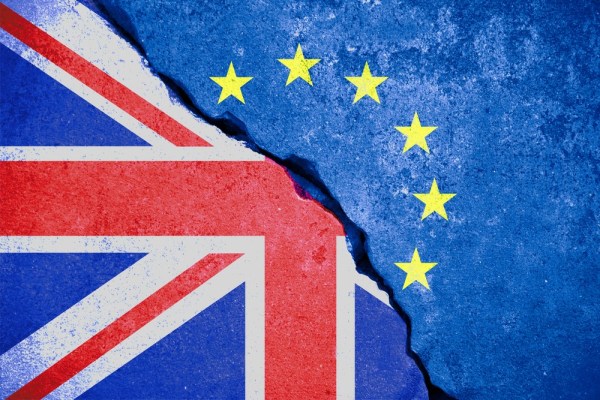
Selfie Diplomacy in a post-Brexit World
In 2015 Dr. Elad Segev and I examined the Selfie Diplomacy of the US State Department. We defined selfie diplomacy as the use of social media sites to proactively manage a nation’s image. In this sense, selfie diplomacy is akin to nation branding campaigns in which a nation’s image can be created, monitored and evaluated... Continue Reading →
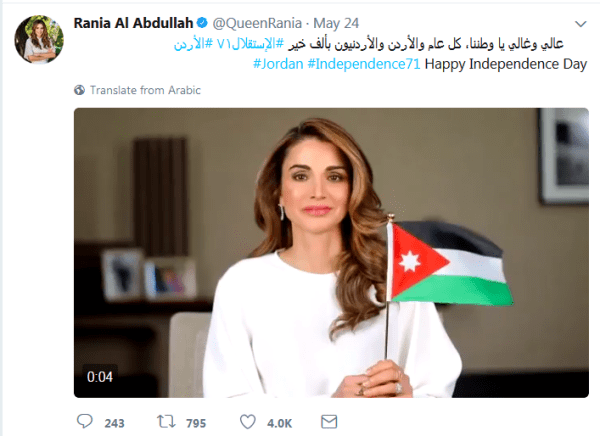
Queen Rania’s Selfie
Introduction The Arab World has always had a strenuous relationship with social media. On the one hand, several countries in the Arab World monitor their citizen’s social media activity, ban social media or shut down social media during times of domestic upheaval. Such was the case when the Mubarak regime attempted to block Facebook at... Continue Reading →
America’s Selfie in the Age of Trump
Note: This post first appeared on the Global Policy website For over a decade the State Department has relied on social media sites to counter extremist narratives, engage in conversation with foreign publics and shape the global diplomatic agenda. Importantly, the State Department also uses social media to manage America's global image. The need to... Continue Reading →
Poland’s #Selfie Diplomacy
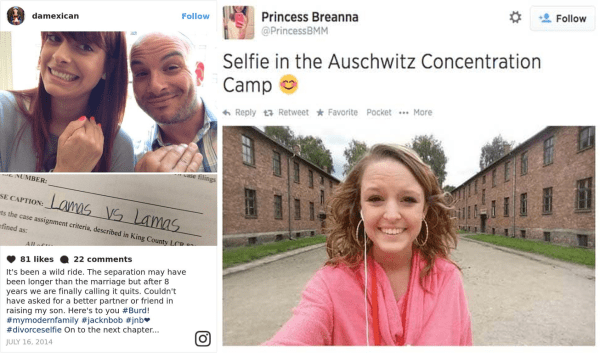
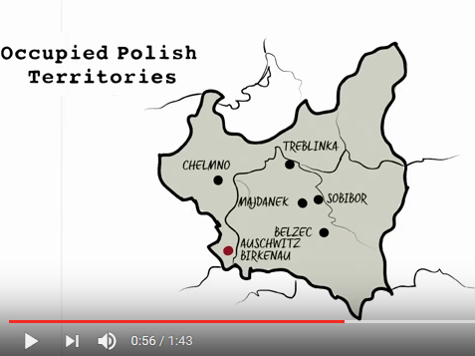
On January 23, 2017, the Polish Embassy in the US published a YouTube video titled “Words Matter”. The video aims to ensure that journalists and social media users employ the correct term when referring to concentration camps built by Nazi Germany on Polish soil during World War 2. This video serves as a fascinating example... Continue Reading →
Gaza’s Selfie: When the national meets the international
For the past 8 years, the Gaza strip has existed as an island entire onto itself. Physically it is cut off from the rest of the world by an Israeli and Egyptian blockade. Politically it is isolated from the West Bank as it is ruled by the Hamas Party and not the PLO. Diplomatically it... Continue Reading →
Selfie Diplomacy- Analyzing Profile Pictures of World Leaders on Twitter
Last week I published an analysis of the Twitter profile pictures of MFAs (ministries of foreign affairs). I argued that such images may be a form of Selfie Diplomacy as profile pictures enable social media users to construct an online identity and communicate that identity to their networks. This week I endeavored to analyze the... Continue Reading →