Since the very inception of digital diplomacy, MFAs and diplomats have used social media to gauge public opinion. Digital Diplomacy units and diplomats routinely scroll through social media, identify trending topics and issues and report on these to headquarters. Diplomats also leverage social media to identify public criticism of their states’ policies. Online outrage and backlash thus have analytic value, as they help diplomats identify contentious policies and actions. Diplomats can then counsel governments urging them to alter state policies, or they can launch bespoke social media campaigns to rebrand contentious policies.
Gauging public opinion is especially important during crises and conflicts as digital outrage is an early warning sign that international support may be eroding. Diplomats scrolling through social media can alert governments that the window for obtaining diplomatic goals through force is closing.
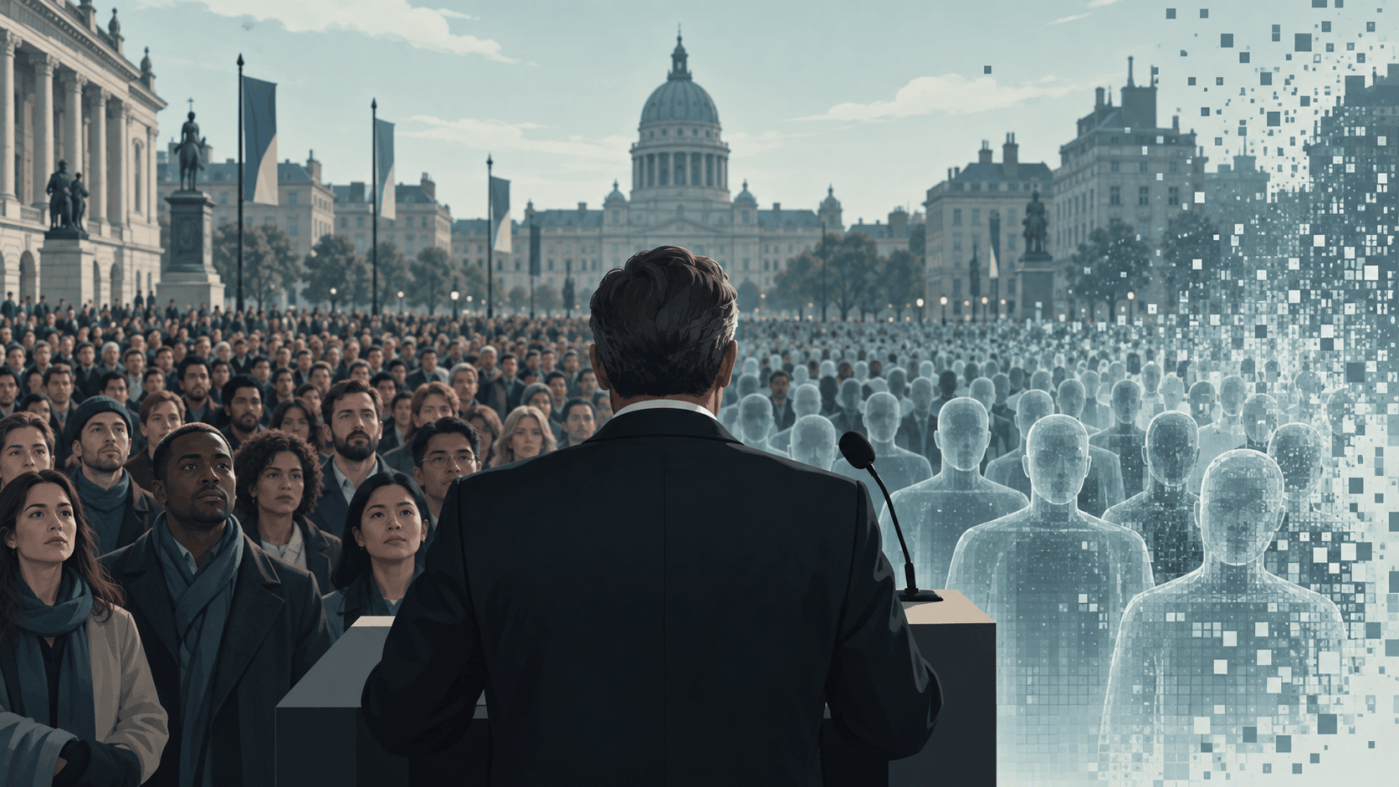
Yet AI may now impede diplomats’ ability to gauge public opinion given the rise of Synthetic Publics. Consider, for example, a diplomat scrolling through a social media platform during a crisis. Thousands of users express outrage at a government’s decision. The posts are fluent, highly emotional and reference local politics and culture. The local outrage is soon picked up by the media. The diplomat authors an urgent cable to the MFA; the ministry prepares a digital response and even alerts decision makers that public pressure to change policy is mounting. Yet the diplomat soon learns that there was no outrage, no public and no mounting pressure but only the synthetic appearance of public outrage.
This hypothetical may soon be real according to a recent Google Threat Intelligence Group (GTIG) report, “Agentic Threat Activity Crosses a Significant Threshold,” published on November 16, 2026. For scholars of digital diplomacy, its section on information operations suggests that diplomacy may soon be threatened by the rise of Synthetic Publics, which are indistinguishable from genuine publics.
To date, debates surrounding AI and disinformation have centered on the synthetic content which can warp public opinion, such as deepfake videos, doctored images and AI-generated fake news sites. Yet the new Google report highlights how quickly AI-based disinformation may come to center on states creating and leveraging Synthetic Publics to shape media coverage, influence perceptions of events and impact public opinion.
In August 2026, GTIG investigated an end-to-end platform, built with the help of the Gemini API and tools from other AI providers, designed to target public sentiment on political topics in Europe and the Middle East. The platform was engineered to automate the full campaign cycle: creating synthetic or AI-based personas, generating multimedia content, distributing it and posting interactively. The prompts suggest an attempt to mimic organic grassroots engagement while evading platform detection. Synthetic personas were instructed to use local dialects and slang, informal phrasing and even intentional typos, all to appear more real. So unlike bots that spew messages, these personas were used to mimic real users posting real opinions.
A second case is starker. GTIG detected a commercial contractor developing a platform engineered to manage more than 100,000 social media accounts across several social media platforms. New social media accounts, managed by AI agents, were set to undergo an automated “aging” period, in which models simulate ordinary behavior, such as lingering on posts, scrolling and engaging with non-campaign content, to build a history of normal activity before any political messaging took place. This aging process is key to the ability to mimic real social media users as AIs create a backlog of activity. So unlike bots, these personas can comment on daily events, share musings on pop culture or join social media groups and post or engage with real users. According to the report, the actor also planned to market the tool to government bodies.
The report does not claim that Synthetic Publics have been deployed as of yet or that they have had any impact. Only that the design and programming of Synthetic Publics is possible.
Yet even this capability may bring about a tectonic shift in diplomacy. Over the past decade, diplomats have been encouraged to listen to foreign publics online, to track sentiment, measure the reach of campaigns and respond to emerging controversies. Each of these practices assumes that there is a real public that expresses real public opinion. Yet this basic assumption may no longer hold water as diplomats engage with, and listen to, Synthetic Publics large enough and loud enough to dominate social media.
This opens a dangerous window for miscalculation, miscommunication and misunderstanding as diplomats mistake synthetic reactions for foreign public opinion. They may treat manufactured controversies as real, spending time and effort on combating windmills. Other times diplomats may be forced to contend with real public outrage instigated by huge volumes of posts authored by Synthetic Publics.
The opposite may also be detrimental to diplomacy. If diplomats and governments become familiar with Synthetic Publics, they may discount public outrage and criticism as fake. Governments may dismiss real dissent as bot activity, a temptation already familiar to governments facing mounting protest and opposition from global publics.
Synthetic Publics may prove a formidable challenge to MFAs in an age when viral posts generate viral protests and vice versa. The question soon occupying diplomats won’t be “Is this claim true?” but “Does this public even exist?” At a more basic level, if seemingly real publics are actually Synthetic Publics, should diplomats even prioritize public diplomacy or digital diplomacy activities?
No single MFA can contend with the challenge posed by Synthetic Publics. But rapid developments in AI capabilities require a swift response from diplomats. First, MFAs must collaborate with one another and with tech companies to create detection technologies that help map and respond to Synthetic Publics and synthetic outrage. Second, diplomats and MFAs must collaborate with AI companies on limiting actors’ ability to profit from the creation and selling of Synthetic Publics to states. Third, diplomats will need new tools to stem the tide of news stories that report on synthetic criticism and false controversies. This could include training journalists and news outlets in the detection of Synthetic Publics.
What MFAs should not do is fight fakes with fakes. A state that manufactures Synthetic Publics poisons the very environment on which diplomacy depends. The use of Synthetic Publics would also harm a nation’s reputation. Detection technologies improve with every exposed campaign, and attribution would be devastating. A single synthetic campaign would retroactively discredit a government’s genuine online engagement and hand adversaries a powerful counter-narrative. Moreover, MFAs that use Synthetic Publics would blur the line between public diplomacy and propaganda, accelerate the synthetic arms race and leave diplomats even less able to tell a genuine public from a manufactured one.


Leave a Reply