The adoption of social media by ministries of foreign affairs (MFAs) has often been conceptualized through the framework of mediatization: the growing adaptation of diplomatic institutions to media logics, the practices and routines through which news organizations select, frame and narrate information. In digital diplomacy, mediatization has manifested in MFAs’ increasing reliance on social media to set media agendas, frame international events, and narrate geopolitical crises in near-real time. This has been particularly evident during wars, when framing and narrating unfolding events become imperative to retaining public support.
Studies have examined how states use social media to frame wars in real time, be it the Israel-Hamas War or the Russia-Ukraine War. Crisis framing allows states to obtain the strategic goal of moral justification, framing military force as necessary and moral while condemning opponents, often on moral grounds. MFAs thus create “moral contrasts” between their own activities and those of their opponents. Such is the case when Russia frames the Ukrainian government as a neo-Nazi mob threatening Russian ethnic minorities.
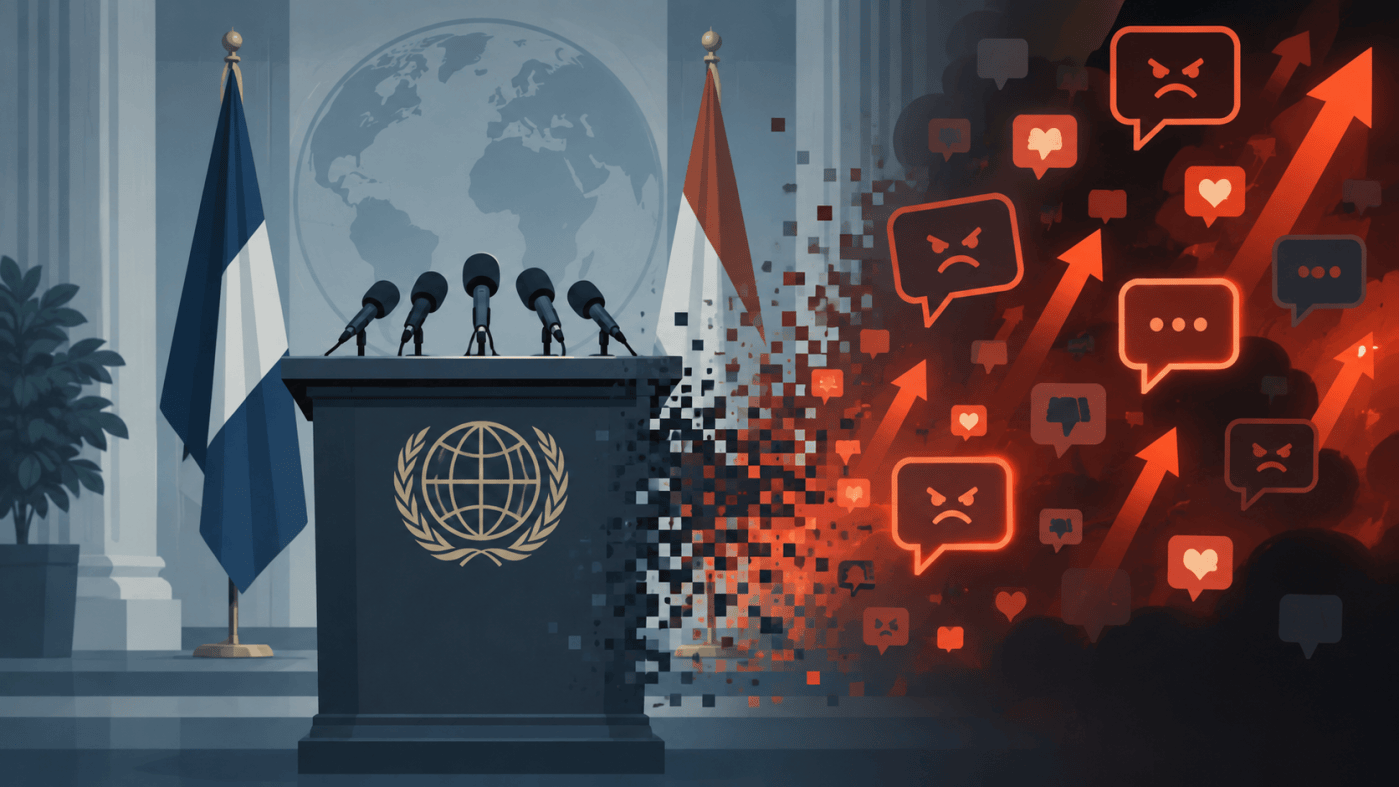
Yet the growing dependence of diplomatic institutions on social media has exposed them to pressures that cannot be fully understood through mediatization alone. While mediatization encouraged diplomats to adapt their communication to journalistic practices such as framing, platformization subjects diplomatic communication to the logic of algorithmic amplification. Nowadays, amplifying messages is crucial as diplomats compete for online attention with celebrities, influencers, OSINT accounts and news outlets. Shaping international interpretations of events thus becomes increasingly dependent on attracting attention in highly competitive information environments.
Digital diplomacy is therefore increasingly characterized by two interrelated competitions: over meaning (mediatization) and over visibility (platformization). These processes coexist; platformization alters the conditions under which states pursue established communicative objectives, and it may transform the content, tone, and visual characteristics of their messages.
Indeed, recent digital diplomacy practices cannot be explained by mediatization: Chinese Wolf Warriors lambasting the West, Russian spokeswoman Zakharova using social media to call for a nuclear war with Ukraine, and MFAs’ growing use of violent imagery. As digital platforms expose diplomats to incentives that favor emotional intensity, personalization, and confrontation, the pursuit of visibility may push diplomats toward practices that depart from established norms: antagonistic rhetoric, personalized attacks on foreign leaders, and graphic wartime imagery.
The growing use of graphic imagery is particularly revealing. Historically, MFA visuals depicted diplomatic meetings, humanitarian assistance, and military operations, serving moral justification during armed conflicts. More recently, official accounts have circulated graphic depictions of death and destruction, especially surrounding the Ukraine War, where diplomats publish images of Russian soldiers being attacked, maimed and killed. Such imagery raises the question of whether diplomatic institutions are adapting their visual communication to the logic of algorithmic amplification, which has been found to favor highly emotional, negative, and even uncivil content.
This possibility introduces an important distinction between visibility and persuasion. Under platformization, diplomatic messages may attract substantial engagement without generating public endorsement. A graphic video may be reposted by supporters, quoted by critics, or discussed by audiences who reject its intended interpretation; each interaction contributes to circulation, yet carries different implications for diplomatic effectiveness. Platformization may thus create a paradox: graphic, emotionally intense communication may increase audience interaction while undermining the norms on which diplomacy has traditionally depended.
Put differently, platformization creates a new tension: a profession marked by civility uses incivility to gain visibility online. This incivility then has profound implications for diplomacy itself, as diplomacy centers on states’ ability to resolve tensions through constructive and civil dialogue. When embracing incivility, diplomats abandon the middle ground, yet it is the middle ground where diplomacy can best be practiced, where conflicts can be resolved and where the mediation of estrangement takes place.
Mediatization encouraged MFAs to internalize the logics of journalism, adapting their messages to routines of selection, framing and narration. Platformization subjects those same messages to the logics of algorithmic amplification, in which visibility is earned through emotional intensity, confrontation and graphic imagery. The challenge facing diplomatic institutions is therefore not only how to compete for attention, but how to do so without hollowing out the norms that make diplomacy possible. A profession that gains visibility by abandoning civility may win the contest for attention while losing the middle ground in which conflicts are mediated and estrangement is overcome. Whether MFAs can resist this trade-off will shape the future of digital diplomacy.


Leave a Reply