
The age of AI has given rise to a new form of public discourse, one that is inherently Synthetic. Throughout the world, individuals are using AI-generated visuals to comment on events dominating national and international politics. These AI visuals often rest on Intertextuality, a term which denotes the fact that most texts are never entirely new and original. On the contrary, most texts reference previous ones. As Barthes argued, every cultural text borrows, echoes or speaks to a prior one. This is especially true of visuals with films, adverts and posters “borrowing” from other culturally resonant texts.
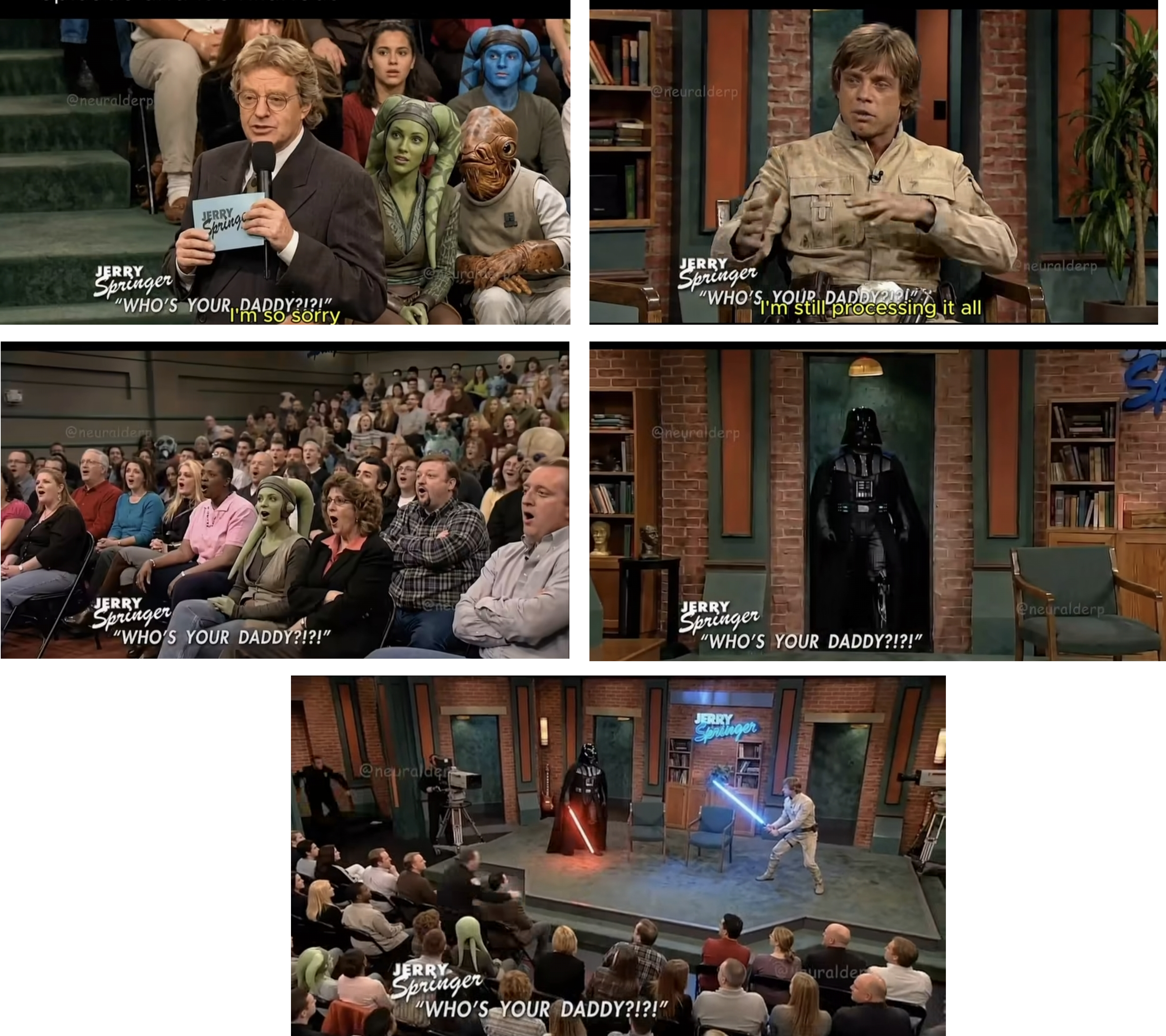
Intertextuality also allows the fusing of distinct cultural texts into a new one. Such is the case with trending AI videos that fuse Star Wars scenes with famous daytime talk shows. In the images below, the clash between Luke Skywalker and Darth Vader is reimagined as part of The Jerry Springer Show, a famous US daytime talk show in which family feuds played out Infront of a studio audience including scandalous elements such as infidelity, incest, profanity, nudity and family brawls. Crucially, the meaning of the images below arises from audiences’ familiarity with both the scandalous Jerry Springer Show and Star Wars films.
Unlike the social media age, which was marked by individuals posting their thoughts, opinions and actions, the age of AI is less about deliberating politics and more about re-imagining and re-narrating political events by referencing familiar texts. Such is the case with AI visuals that re-narrate the Russia-Ukraine War through the Lord of the Rings Trilogy, or the re-narrate the US-Iran War through references to Star Wars films or Marvel franchises. These narratives may help elucidate complex political events by relying on the familiar roles of heroes, villains and the triumph pf good over evil. Casting Ukraine as a Marvel superhero immediately casts Russia as a real-world villain akin to Marvel’s Thanos.
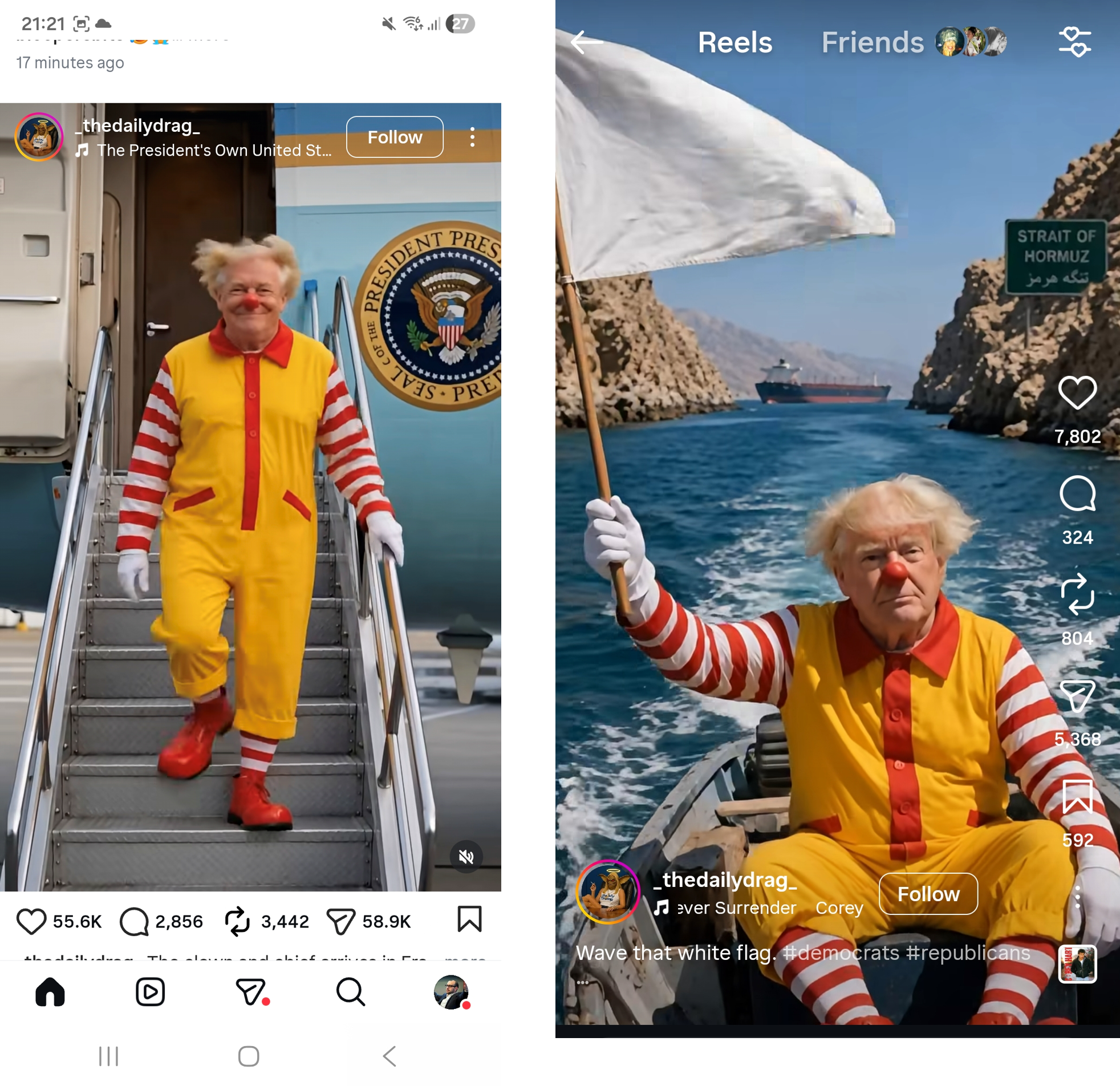
Synthetic Intertextuality is also a new tool for critique. The images of Luke Skywalker and Darth Vader on The Jerry Springer Show include a possible critique that beloved Star Wars films are nothing more than a telenovela or a daytime soap opera. The story of Luke Skywalker and his father is not poetic; it is banal and prone to melodrama. Such critique is also evident when individuals use Synthetic Intertextuality to comment on political events. The images below all reimagine Donald Trump as the MacDonald’s clown Roland Macdonald. In one image, the Intertextual “Donald Macdonald” arrives in a clown suite to meet with G7 leaders, in another the clown is seen flowing through the Iranian Hormuz Strait waving a white flag of surrender. The critique, that Trump is a clown fumbling his way through international affairs, rests on audiences’ familiarity with both the pop culture icon Ronald Macdonald and contemporary events such as the Iran War and the tense G7 meeting held last week.
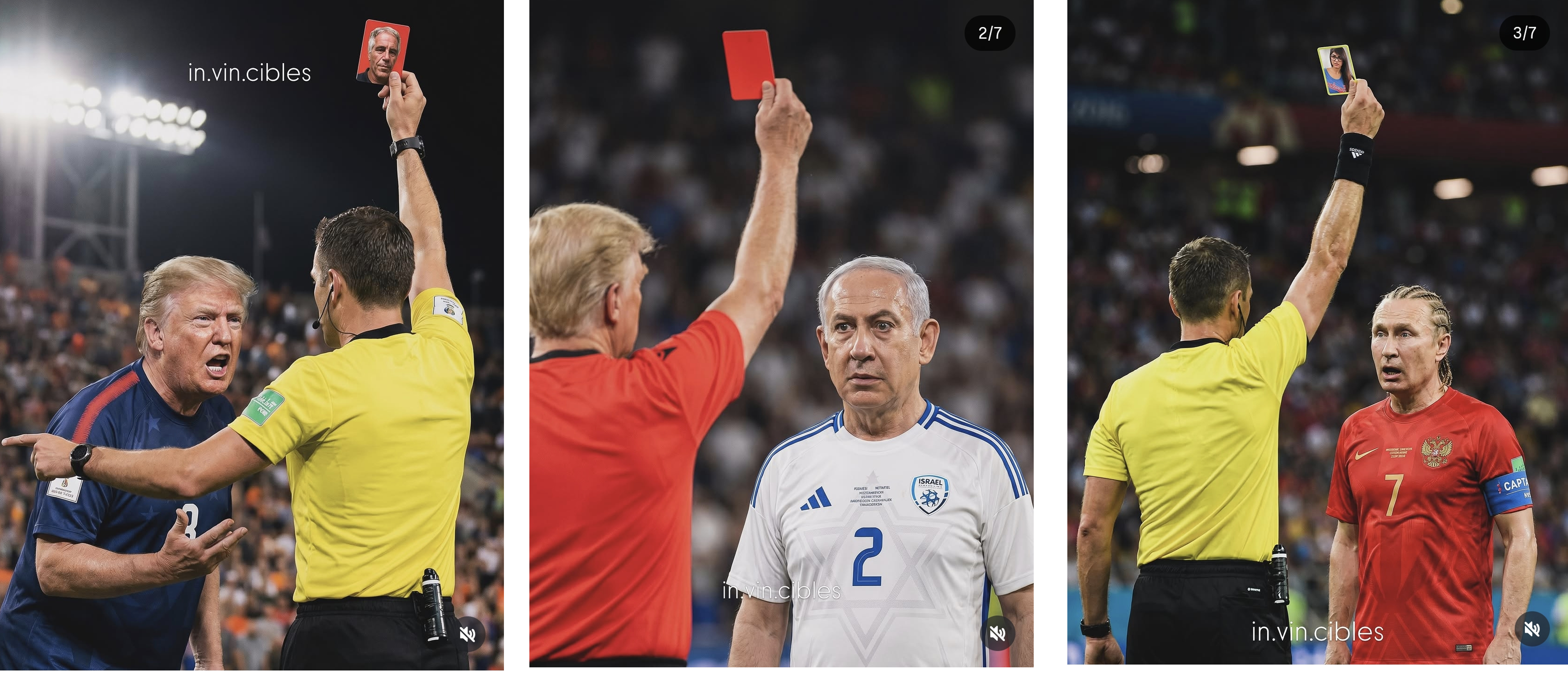
Similarly, the AI images below transport world leaders to the FIFA World Cup. In one image, Donald Trump is issued a Red Card, and thrown off the pitch, due to his relationship with convicted child sex offender Jeffry Epestien. Israeli leader, Benjamin Netanyahu, is stunned to receive a Red Card as is the re-stylized Valdimir Putin, whose hair is made resemble fashionable football stars. In all these instances, political critique also rests on familiarity with pop culture events such as the World Cup, as well as an understanding of current events such as Trump’s alleged goal of distancing himself from sex predator Jeffry Epstein through the Iran War.
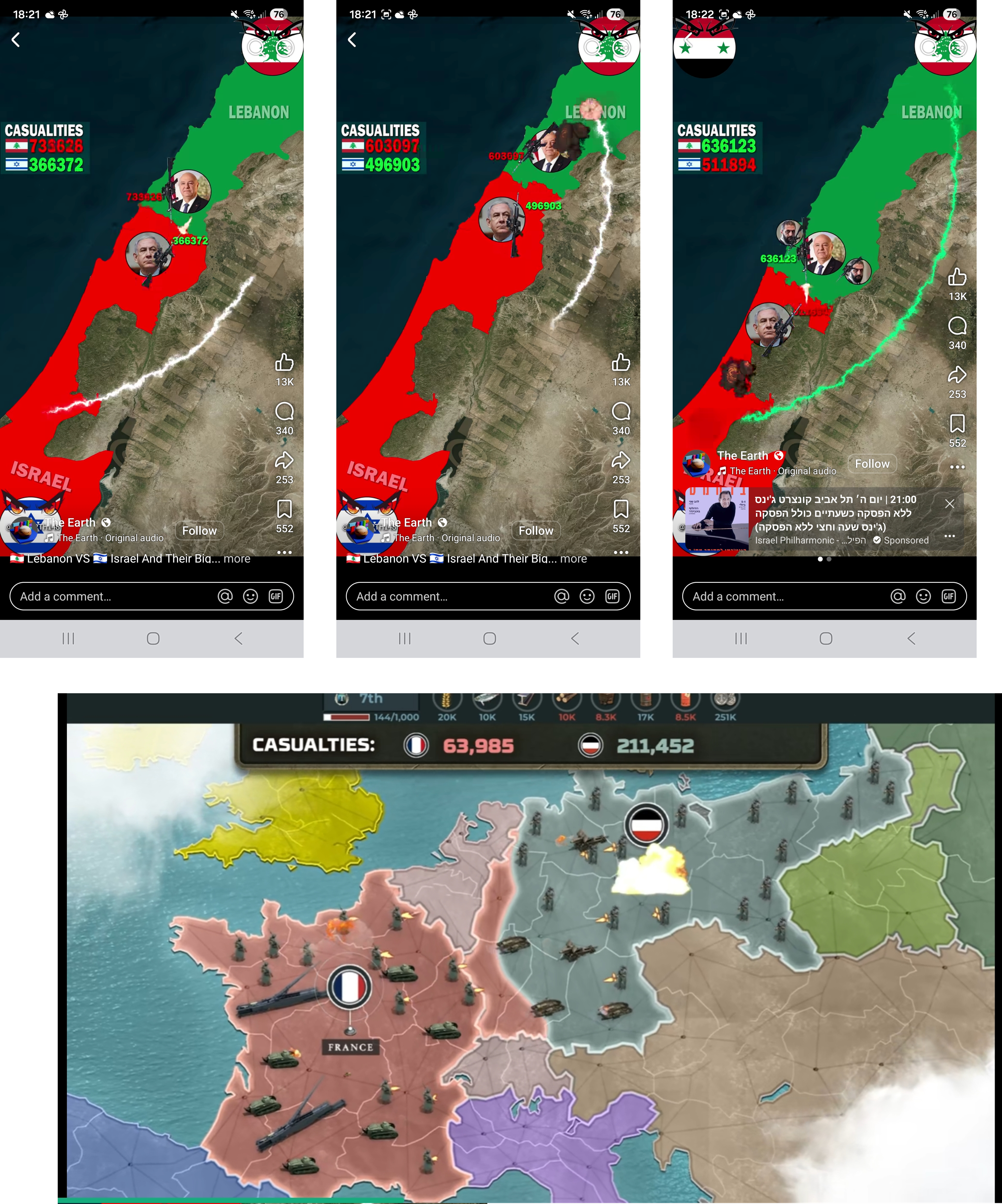
Finally, the video below recasts the Israel-Lebanon war as a different culturally familiar text – social media adverts. The video re-casts the War as a smartphone game of domination where players choose a country and seek to take over the world. In most of these ads, one country invades another until it is finally pushed back and conquered. The same thing happens in the AI-generated video where Israel, led by Benjamin Netnayau, invades Lebanon, only to be thwarted and pushed back with Lebanese forces invading and conquering Israel. One possible critique is that Israel’s affinity for invading neighboring states and territories will only results in Israel being ostracized by its neighbors becoming an isolated island state.
The examples in this post illustrate the extent to which individuals now use AI-generated visuals, and Synthetic Intertextuality, to comment on political events. In many cases, Synthetic Intertextuality fuses present day events with poplar culture. This signifies an important shift as digital users no longer merely comment on political events. They re-imagine, re-interpret and re-narrate political events, giving them new meaning. Crucially, while social media posts persuade through argumentation, Synthetic images persuade through emotional appeal. Intertextual visuals evoke positive emotions thanks to references to beloved pop culture texts and icons. Moreover, these examples illustrate that Synthetic Intertextuality is no longer a rare cultural occurrence, one that demands great resources as one text must echo another. Thanks to Generative AI, any individual can create Synthetic Intertextuality, transforming it into a culturally dominant means of political sense making and critique.
However, as is the case with any visual, AI visuals denote reality but do not depict reality. They transform horrid wars into viral moments with America’s War against Iran stripped of its human cost and devastation and made comedic using Ronald Madconald. Likewise, Israel’s relentless attacks on Lebanon, and the devastating human tool on the civilian population, are absent from the smartphone game advert shown above. In all these instances, acts of war and acts of aggression are stripped of their moral dimensions. Ultimately, these AI images remove bloodshed, destruction, grief and victimhood while making wars, and war criminals, visually attractive and emotionally pleasing. This all serves to normalize and legitimize war, which is no longer a rapture in human morality, but one more event made viral thanks to Generative-AI.


Leave a comment