
Over the past decade, scholars have used a variety of terms to describe diplomats’ use of digital technologies to obtain foreign policy goals. These have included “Diplomacy 2.0,” “Twiplomacy,” “virtual diplomacy,” and the more widely used “digital diplomacy.” More recently, scholars and practitioners have adopted the term “Tech Diplomacy” to capture a changing geopolitical landscape in which technology companies increasingly function as diplomatic actors while diplomats themselves engage with issues such as AI governance, digital sovereignty, and manage relations with Silicon Valley. Yet the rise of generative AI may necessitate another conceptual shift.
The advent of AI, and generative AI in particular, may require a new term: Synthetic Diplomacy. Synthetic Diplomacy denotes a stage in the digitalization of diplomacy in which diplomatic practices are increasingly shaped by AI-generated representations, communicators, interactions, and relationships. If traditional diplomacy rested on interactions between human diplomats, and digital diplomacy focused on human diplomats leveraging digital technologies, Synthetic Diplomacy involves partially or wholly synthetic communicators, interactions, and representations. Synthetic Diplomacy refers to a new form of diplomacy increasingly conducted through synthetic actors and content.
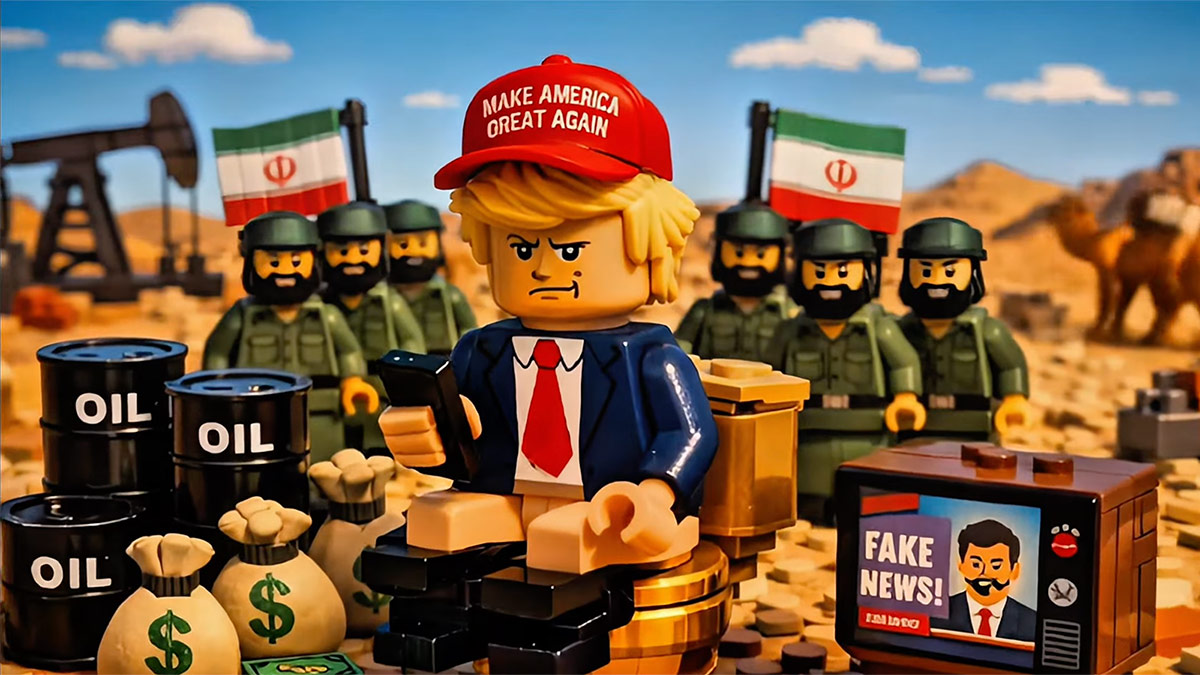
The first dimension of Synthetic Diplomacy concerns synthetic representations. Around the world, diplomats, states, and publics increasingly rely on AI-generated visuals to narrate, interpret and discuss global events. One recent example is Iran’s use of AI-generated videos mocking President Donald Trump and Prime Minister Benjamin Netanyahu during the US-Israeli war on Iran, portraying both leaders as Lego-like characters fumbling their way through crisis management.
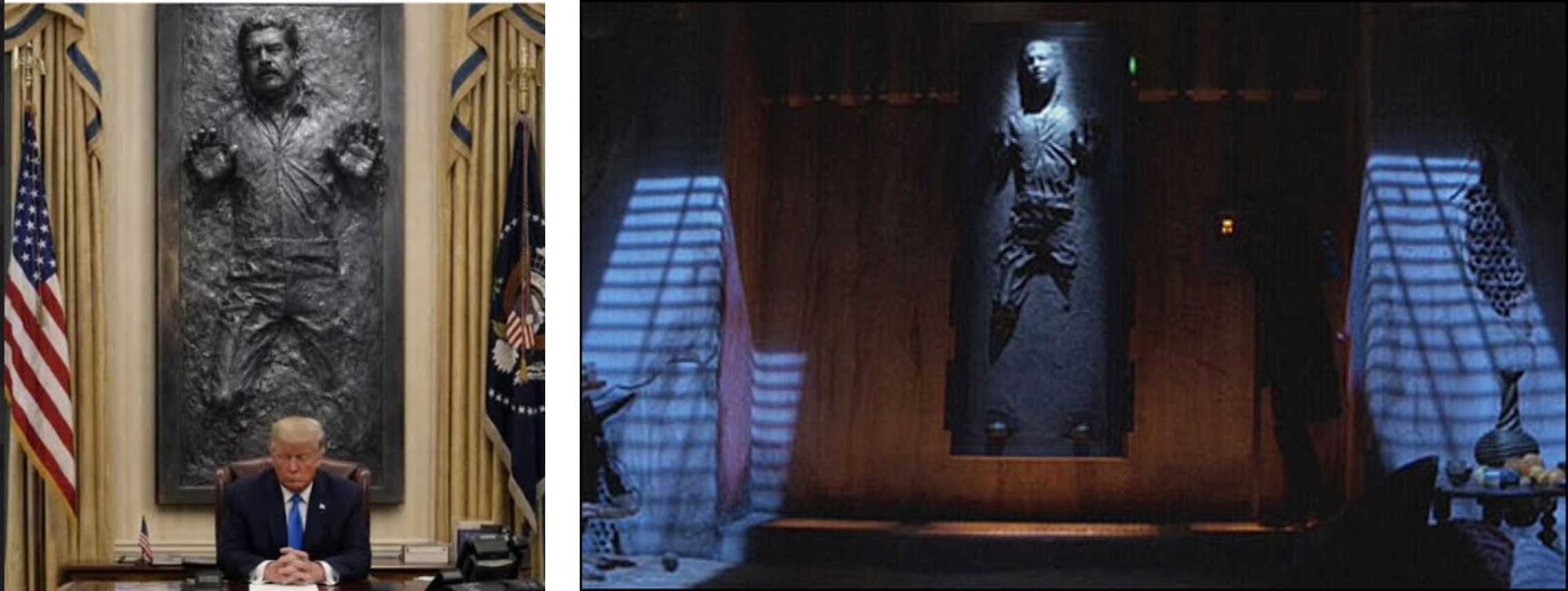
Another prominent example is the viral “All Eyes on Rafah” image, which became a powerful symbol during Israel’s War on Gaza. Such representations are “synthetic” because they emerge from human and AI collaborations, blending human creativity with algorithmic generation. Many also rely on what may be termed Synthetic Intertextuality, in which popular culture references, symbols, and tropes are merged with geopolitical events to shape how digital publics interpret world affairs. Such is the case with the image below, blending the capture of Venezuelan President Nicolás Maduro with Star Wars.
The second dimension concerns synthetic communicator as diplomacy increasingly relies on AI-enabled actors that communicate on behalf of states. These include consular chatbots answering citizens’ questions in real time, AI generated spokespersons narrating events across digital platforms, and AI avatars used to rapidly create and disseminate diplomatic content. Ukraine and Israel, for instance, have experimented with AI-generated communicators capable of disseminating wartime messages at scale. Importantly, these communicators do more than share information; they engage in dialogue with digital publics, creating new forms of human-machine communication in diplomacy.
The third dimension involves synthetic interactions. Diplomats spend growing amounts of time interacting with AI systems to draft speeches, analyze vast amounts of information, simulate crises, model negotiations, or generate policy alternatives. In this sense, diplomats are not simply using AI tools but increasingly collaborating with Synthetic partners such as AI chatbot or companions. Here, the implications of Synthetic Diplomacy may become particularly profound. As diplomats repeatedly interact with AI bots or companions, they may develop forms of Synthetic Intimacy, or feelings of trust, closeness, and reliance toward AI systems.
This development matters because trust has always been fundamental to diplomacy. Successful negotiations are often the result of personal trust between diplomats. Yet what happens when diplomats begin trusting machines? If diplomats increasingly rely on AI companions to interpret events, formulate recommendations, or evaluate policy options, Synthetic Intimacy may foster a new form of trust between diplomats and machines. This trust may render diplomats vulnerable to algorithmic biases, which are embedded into any AI systems. AI biases could generate faulty analyses, faulty recommendations and even policies based on biased information.
The fourth and final dimension is synthetic relationships. Unlike interactions, relationships are more meaningful, they develop over time, and are often emotionally driven. Traditionally, diplomacy has sought to cultivate relationships between diplomats and foreign publics to strengthen ties between states. Yet AIs may increasingly alter the foundations of these relationships. States could create synthetic publics designed to amplify state narratives, manufacture legitimacy for state policies like war, or shape online discourse through large volumes of AI-generated content. Activists, meanwhile, may use synthetic grassroots movements to influence public opinion and pressure governments into certain policies. Equally significant is the possibility that citizens may believe they are developing relationships with diplomats while actually interacting with MFA chatbots or state-sponsored AI companions.
The ultimate implication of Synthetic Diplomacy may be growing uncertainty over who, or what, is actually communicating. In an era of synthetic representations, synthetic communicators, synthetic interactions, and synthetic relationships, diplomats and publics alike may increasingly struggle to distinguish between human and machine actors. In the age of Synthetic Diplomacy, the defining question may no longer be what states say, but who, or what, is actually speaking to whome.


Leave a Reply